Tell us about the job
Takes about a minute. No obligation.
A contractor diagnosing a mini-split repair here starts with the compressor and the contactor, because those are the components that absorb every start and stop across a long cooling season. Homes in Richland County, SC run cooling about five months a year, from May through September. The compressor on a ductless system cycles repeatedly through that stretch, and the contactor that triggers each cycle takes the brunt of it. By the time a homeowner notices reduced output or unusual noise, the refrigerant circuit and the electrical switching components have often already logged enough wear to narrow the diagnosis considerably. A contractor who opens the unit in this county checks those parts first, not last.
Mini-split systems in this county are frequently installed in houses whose walls and attic runs already had a long service history before the first ductless head went in. Half the homes in Richland County, South Carolina were built in 1989 or earlier (2020-2024 ACS 5-year). When a contractor opens the unit, what they find in the line set, the condensate drain, and the electrical connection to the air handler reflects that accumulated history. Corrosion at flare fittings, blocked drain lines, and loose terminal connections at the indoor unit are common repair findings in stock of this vintage. Parts availability for the refrigerant circuit is rarely the problem; the condition of everything around the unit often is.
The Parts of a Mini-split a Contractor Checks First
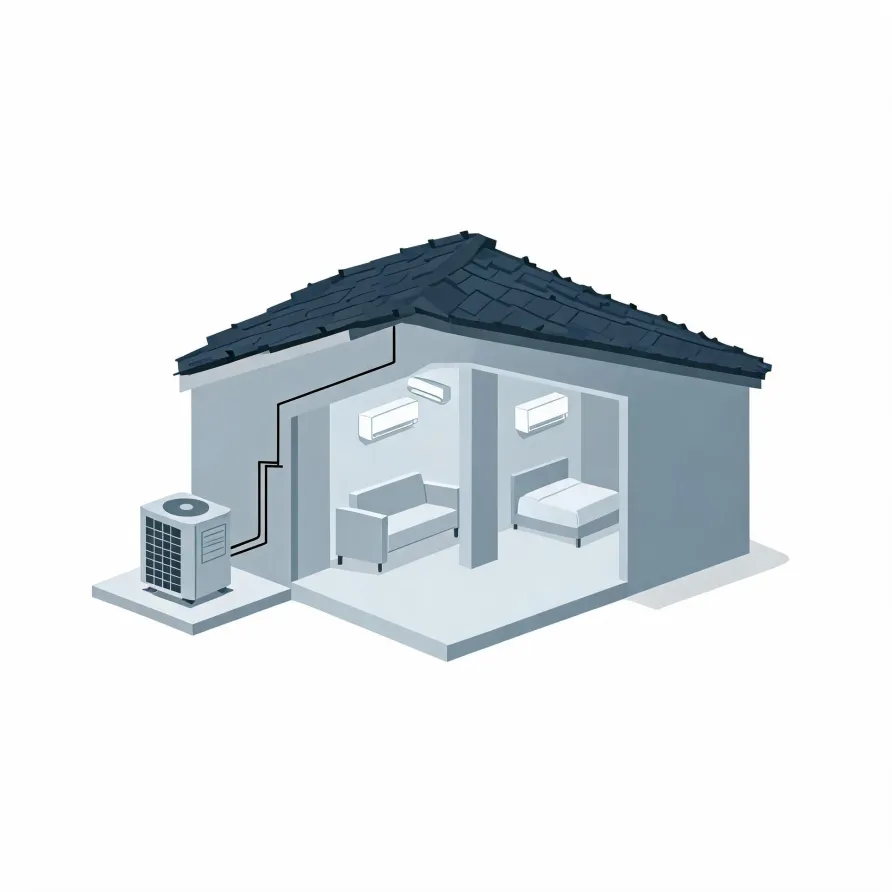
The indoor air handler mounts high on a wall inside the room and is the piece most homeowners notice when something goes wrong. It holds the evaporator coil, a blower fan, and a filter. When airflow drops, temperatures swing, or the unit leaks water, the fault usually starts here.
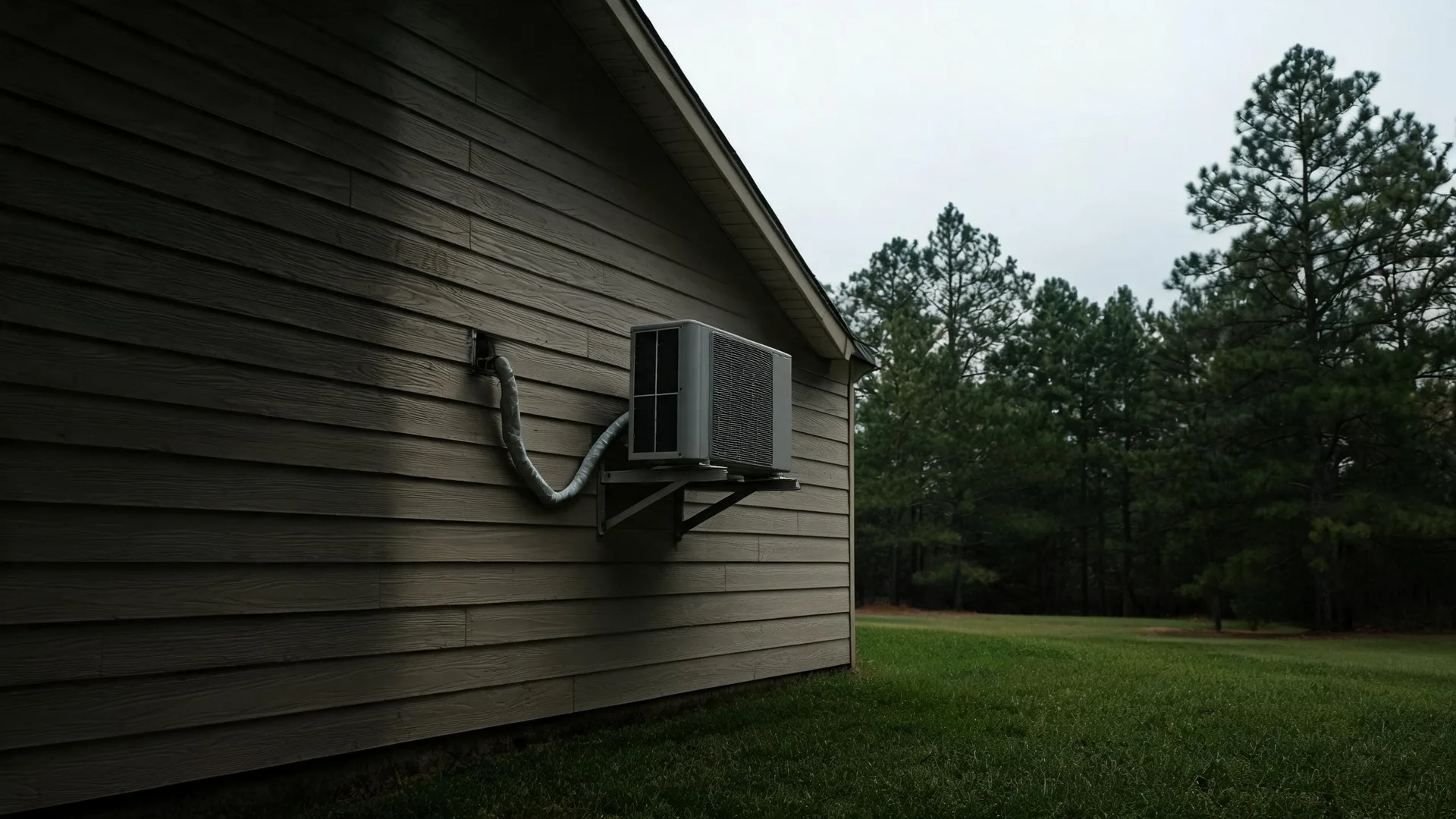
The outdoor condenser unit sits on a pad or bracket outside the house and carries the compressor and condenser coil. A refrigerant line set and a control wire run between the two units through a small opening in the wall. The compressor and the connections along that line set are where a contractor looks when the system runs but will not cool or heat.
The drawing shows a typical layout, and a licensed contractor determines which components apply to your specific installation.
Get matched in Richland CountyRichland County by the numbers
440 severe weather events were recorded in Richland County, South Carolina between 2015 and 2024.
NOAA National Centers for Environmental Information, Storm Events Database, bulk CSV export, events 2015-01-01 through 2024-12-31.Half the homes in Richland County, South Carolina were built in 1989 or earlier (2020-2024 ACS 5-year).
U.S. Census Bureau, 2020-2024 American Community Survey 5-Year EstimatesRichland County, South Carolina holds 187,611 housing units (2020-2024 ACS 5-year).
U.S. Census Bureau, 2020-2024 American Community Survey 5-Year EstimatesOwners occupy 60.3% of the occupied homes in Richland County, South Carolina (2020-2024 ACS 5-year).
U.S. Census Bureau, 2020-2024 American Community Survey 5-Year EstimatesCodes & Standards Covering Mini-Split Repair in Richland County, South Carolina1 sourced rules and standards
Contractor Rules in Richland County, South Carolina
South Carolina requires a mechanical contractor license for contracting work whose total cost of construction is greater than ten thousand dollars.
Severe Weather Events in Richland County
Weather in this part of South Carolina puts real demands on heating and cooling equipment, and those demands show up as repair calls. A mini-split running hard through whatever the local climate delivers will wear differently than one sitting in mild air, and that makes the weather record a useful part of understanding repair work here.
440 severe weather events, 2015–2024. Source: NOAA National Centers for Environmental Information, Storm Events Database.