Normal sounds
A soft whoosh of air, a quiet click when the compressor starts, a low hum while it runs. That's the sound of a mini split doing its job, warming the room without strain. Nothing about it should grab your attention twice.
A mini split that bangs, clicks, or hums more than usual in winter is most likely going through a defrost cycle. South Carolina winters still dip cold enough overnight that outdoor coils pick up frost, and the system has to stop, reverse itself, and run briefly like an air conditioner to melt it off before switching back to heat. That reversing valve shifting, and the outdoor fan slowing or stopping, is what produces the clunk or whoosh you hear. A steady buzzing or rattling is different. That can mean a loose panel, a fan blade hitting ice buildup, or a part working harder than it should. Short clicks when the system starts or stops are normal. A noise that keeps repeating, gets louder, or comes with weaker heat in the room is worth having looked at, since it points to something beyond the defrost cycle itself.

A soft whoosh of air, a quiet click when the compressor starts, a low hum while it runs. That's the sound of a mini split doing its job, warming the room without strain. Nothing about it should grab your attention twice.

Grinding, rattling, or a bang that repeats isn't defrost. Dust and a dull film on the casing often mean the filter hasn't been cleaned in a while, and a blocked unit works harder than it should. If the noise keeps up after a cycle ends, something inside needs a look.
You hear it most on the colder nights, a clunk or a thud right as the unit shifts gears, and it's loud enough to make you check on whoever's trying to sleep near it. The sound happens right when the system reverses itself, and that timing is the clue to what's actually going on.
Inside the outdoor unit is a reversing valve, and that's what flips the system from heating back to cooling for a few minutes to melt frost off the coil, then flips it back. That valve has a slide inside it, and when it moves, it can hit its stop hard enough to make a clunk or thud you can hear inside the house. A single clunk at the start and another a few minutes later when it switches back is normal. Grinding, repeated banging, or a clunk that doesn't resolve into quiet running afterward points to a valve that's sticking or wearing out, and that's worth having a contractor look at before a cold snap makes it worse.
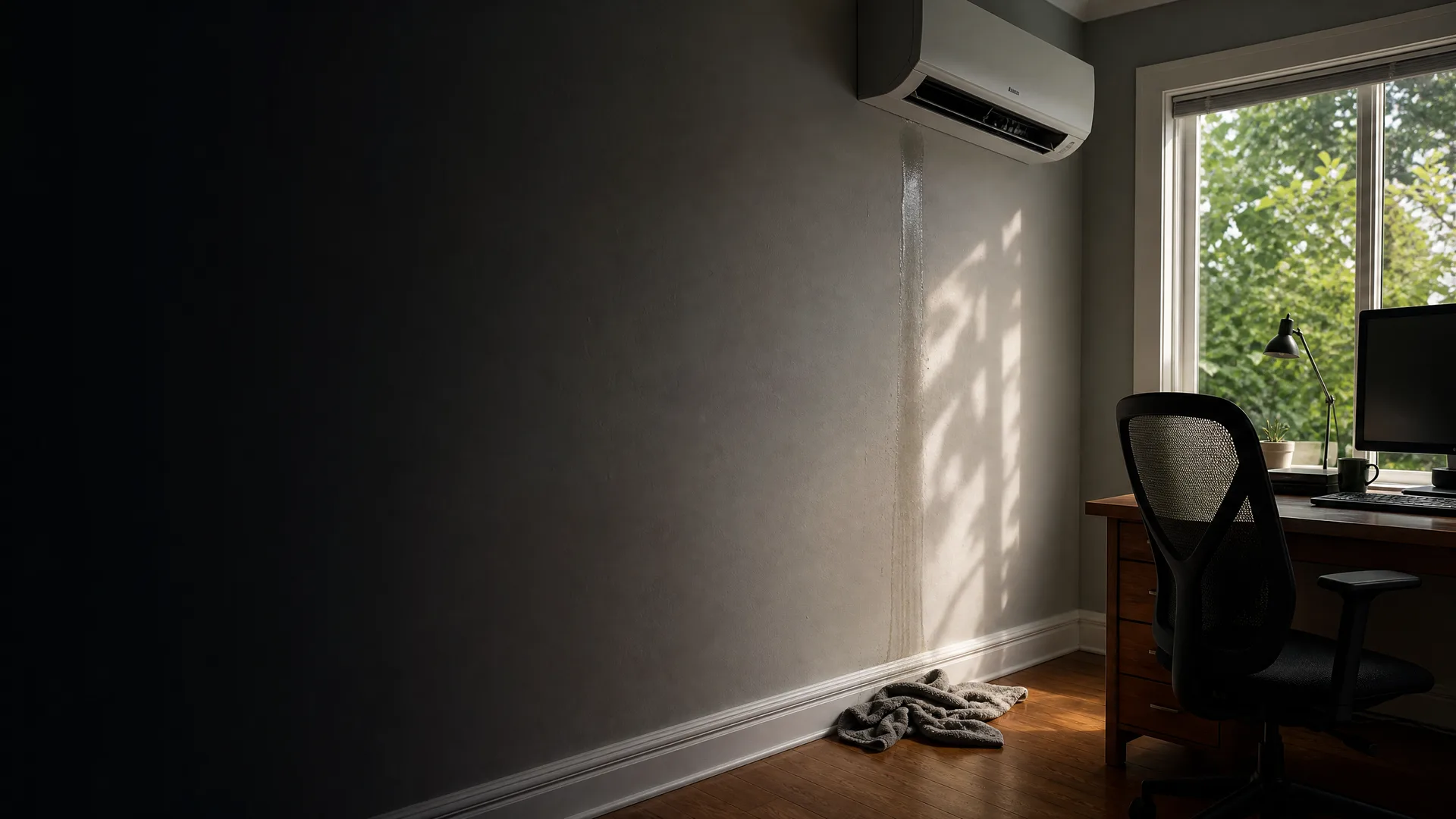
You're at your desk in the home office in July, mini split blowing steady and cold against the South Carolina heat outside. You notice the carpet under the window feels damp before you see why. Then you spot it: a wet streak running down the wall below the indoor unit, dark against the paint, spreading slower than it dripped. You grab a towel and lay it on the floor where the water's pooling. The unit is still running, still cold, still humming along like nothing's wrong. You stand there a second, towel under your foot, wondering how long it's been doing this before you walked in.


The noise starts with a valve. When frost builds on the outdoor coil, a reversing valve inside the system throws itself the other way, and that's the clunk you hear. Hot refrigerant now runs backward through the outdoor coil to melt the ice off it, instead of carrying heat into your home. While that happens, the indoor fan backs off or shuts off completely, so you don't feel a blast of cold air in the room. The outdoor fan often stops too, so there's a short quiet stretch right before things get loud again. As refrigerant pushes through the reversing valve, you can hear a whoosh or a gurgle for a minute or so. The metal panels and lines are heating and cooling fast through all this, and they tick or pop as they expand and settle back. None of it is the thermostat calling the shots. A control board is reading the temperature of the outdoor coil and timing the whole cycle on its own, independent of whatever you've set inside.




Send the request today and stop worrying about who to call.
A local pro who knows mini splits gets your details and gets in touch.
It costs nothing to send, and you don't have to hire anyone.
Walk past the indoor unit on a cold night and listen for a few seconds. A click when it starts, a soft rush of air, that's expected. What's worth noting is a change from what you're used to: a rattle that wasn't there last winter, a grinding sound, a hum that's gotten louder room to room, or banging from the outdoor unit that seems to come more often than it used to. If the noise is paired with the room taking longer to warm up, or air that feels weaker than it should, the unit may be working harder than it needs to. Left alone, that strain tends to wear on the parts doing the work, and the people counting on that room staying warm feel it first.
The thermostat senses outdoor coil temperature dropping toward freezing.
The system pauses heating and enters defrost mode automatically.
The reversing valve clunks as it redirects hot refrigerant outdoors.
The indoor fan slows or stops to hold back cold air.

The weather driving that defrost cycle in winter isn't the whole story on your mini split. In summer, South Carolina air carries a dew point around 69°F, according to NOAA averages for June through August, which is heavy and sticky even before the temperature climbs. Your mini split has to pull that moisture out of the air as much as cool it, so the compressor runs longer and the outdoor unit works harder than it would in a drier climate. That extra load year-round is worth knowing about if you're hearing new noise now. A system that's been straining all summer can carry wear into winter, and a clunk or rattle during defrost season might be the first sign of something that built up months earlier.
NASA POWER T2MDEW county cells weighted by homes


Defrost usually runs for a few minutes at a time, several times on a cold night, then stops on its own once the outdoor coil clears.
If the noise keeps going well past that, or the indoor fan never comes back on, that's the point where it stops being defrost and starts being something a contractor needs to look at.
At 15.12 cents per kilowatt-hour, running your mini split through a winter night of defrost cycles costs about what you'd expect, nothing out of line. If the clunking or fan noise drags on longer than it should, that's extra runtime you're paying for, not just extra noise to live with.
EIA-861 2025 statewide residential average
Nobody checks on it. The filter stays caked with dust through most of the winter, the outdoor coil sits under leaves or a drift of pine straw, and the noise it makes slowly becomes normal because nobody remembers what it sounded like new. By February the clunk at defrost has gotten longer and the fan takes its time coming back on, and the people in the house have stopped noticing because it happened a little at a time.

Someone walks past it a few times a week and knows what it's supposed to sound like. The defrost clunk is quick, the fan comes back within a few minutes, and when something changes, a longer cycle, a grinding sound, a hiss that doesn't stop, they notice that same day instead of in March. Catching it early is the only real advantage here. It doesn't make the unit quieter on its own, it just means the problem gets found while it's still small.

A mini split that clunks into defrost, runs its fan down low, then kicks back on a few minutes later is working the way it's built to work on a cold South Carolina night. That pattern repeats itself and stops on its own. What doesn't fit that pattern, a noise that keeps going, a grinding sound, a fan that never comes back, is the signal worth paying attention to.
If what you're hearing has crossed that line, you don't have to figure out which part is behind it before you ask for help. Send in what you've noticed, when it happens, how long it lasts, and you'll be matched with a contractor who takes it from there. They'll reach out to you directly. Once that's sent, you're not the one tracking down who's available or chasing a callback. That part is off your plate.






Send the request today and let a mini split pro reach out to you.
No charge to send it. You decide if you hire them.