





Ductless South Carolina
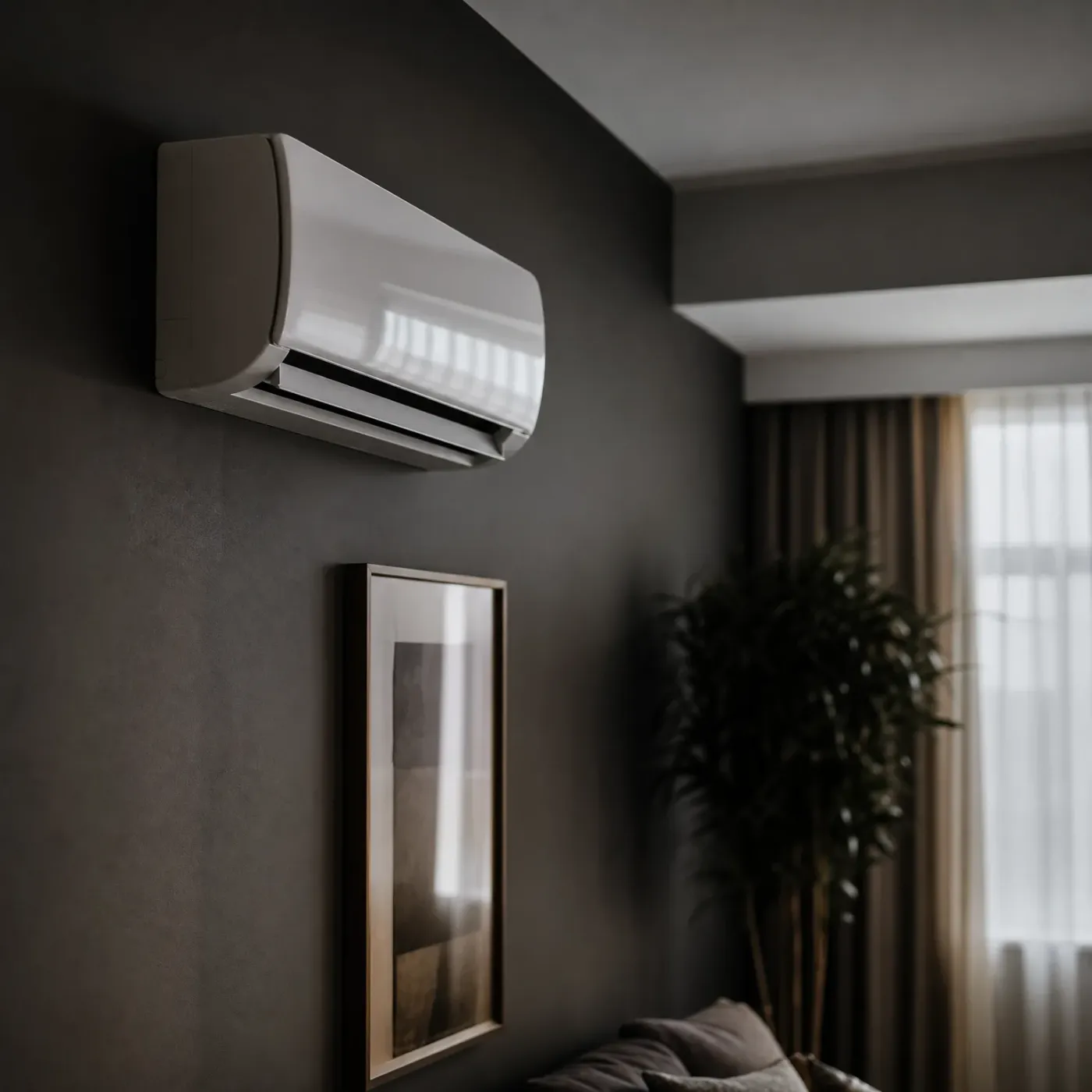
A white wall-mounted mini-split air conditioner on a dark gray interior wall above a framed picture, with a potted plant and curtained window to the right.

A pro who works on mini splits

What a mini split tune-up covers in South Carolina

A mini split tune-up covers the filters, the coils, the condensate drain and the refrigerant level, along with a check of how well each indoor head is still cooling and heating. This page walks through what gets done and what it means for a system running through South Carolina summers. If you want a licensed local contractor who works on mini splits regularly to take a look at yours, the button below gets you matched with one.

Get matched

A mini split tune-up means a contractor goes through each indoor head and the outdoor unit and checks the parts that decide whether the system keeps up. The filters in the indoor heads get pulled and cleaned, since a clogged filter cuts airflow and makes the unit work harder to cool a room. The coils get checked too, because a dirty coil loses its grip on the heat it's supposed to move, and in a South Carolina summer that shows up fast as weaker cooling and a higher bill. The condensate drain gets cleared so the system isn't fighting a backup, and the refrigerant level gets checked since a system running low won't cool right no matter how clean everything else is. Each head also gets tested on its own, because in a multi-zone system one head can be struggling while the rest of the house feels fine. The point is catching what's starting to go wrong before it costs you a season of comfort.

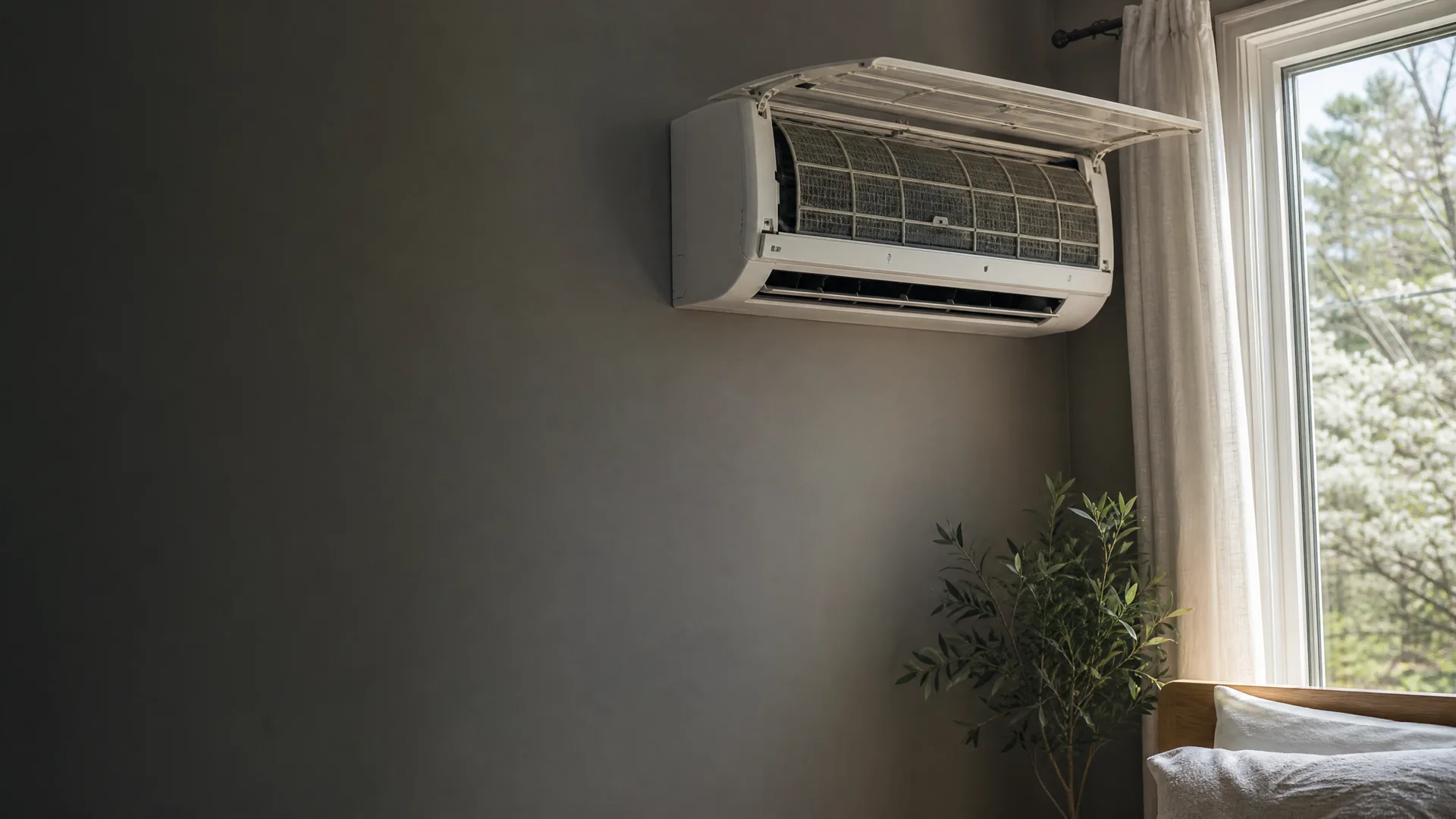
A wall-mounted mini-split air conditioner with its front cover open exposing the filters, on a gray interior wall beside a curtained window with green trees outside and a potted plant below.

You pop the front cover off the indoor unit in the bedroom to see why it's blowing warm. It's a mild spring afternoon, the kind where you'd normally leave the mini split alone until the real heat sets in. Behind the cover, the filter screen is grey with dust, thick enough that you can't see through it to the coil underneath. You run a finger across it and it comes away gray. This is the unit that will carry the room through a South Carolina summer in a few months, and right now it's pulling air through a screen that's mostly clogged. You set it on the counter, wondering how long it's been since anyone looked at it.

Tune-Up Now or Wait for a Problem

With a tune-up

  • A contractor catches a dirty coil or a low refrigerant charge before it costs you a July afternoon with no cooling.
  • Each indoor head gets checked against the others, so a bedroom unit that's lost output shows up before it quits.
  • The condensate drain gets cleared, which matters in South Carolina humidity where that line can clog faster than people expect.
  • A clean filter and coil mean the system isn't working harder than it has to to hold a temperature.
  • Since most homes here heat with electricity through the same unit, a fall check catches problems before the first cold snap.

Without one

  • A clogged filter keeps cutting airflow quietly, and the system runs longer to do the same job.
  • A slow refrigerant leak goes unnoticed until the head that's losing charge stops cooling that room at all.
  • A condensate drain that's never checked can back up, and in a muggy South Carolina summer that happens on its own schedule, not yours.
  • Dirt builds on the coil a little at a time, and nothing tells you it's there until output drops.
  • The failure shows up as a head that won't keep a room comfortable, usually on the day you need it most.
  1. The outdoor unit gets shut down and the covers come off each indoor head.

  2. Filters slide out first, since dirt there blocks every check behind them.

  3. The indoor coil and blower wheel get inspected and cleaned of buildup.

  4. The condensate drain line gets cleared so it drains without backing up.

A gray-haired, bearded man in a dark coat dusted with snow stands smiling in a dimly lit room with a lamp, mirror, framed art, and a sofa in the background.
An older man with white hair and a beard, wearing a dark snow-dusted coat and scarf, stands in a warmly lit interior hallway with a framed landscape picture, a table lamp and a potted plant behind him, and a snowy view through a window at left.
An older man in a dark snow-flecked overcoat and scarf stands smiling in a warmly lit home entryway, with a glass-paned door showing darkness outside and a lamp-lit room visible through a doorway behind him.
An older man with gray hair and a beard, wearing a dark snow-dusted jacket and scarf, stands smiling in a warmly lit interior hallway with a lit table lamp, a vase of dried branches, and a framed picture in the background.

Get your mini split to the right pro

A licensed local pro takes the request for your mini split tune-up.

Sending the form costs nothing.

Why the outdoor unit matters

Every indoor head in the house runs off the same outdoor unit, so a coil caked with pollen or grass clippings makes all of them work harder, not just one room. A contractor washes the outdoor coil and checks that the fan spins freely and clears the space around it. In South Carolina, that coil sits outside through pollen season and through grass cutting all summer, and it collects both. A dirty outdoor coil raises the pressure the compressor has to push against, and that shows up on the power bill before it shows up as a comfort problem.


What the refrigerant check tells you

A mini split holds a fixed charge of refrigerant, and it doesn't burn off or wear out on its own. If the level reads low, the system isn't using it up, it's leaking it out somewhere in the line set. A contractor checks the charge against what the system is rated for and looks for the leak if it's short. Running low on refrigerant for long makes the compressor work harder to move heat, which is the part of the system most expensive to replace if it fails.

A woman wrapped in a cream textured blanket sits in an armchair beside a lit lamp and a dark window, with an open book in the foreground.
A smiling older woman with gray hair in a cream knit sweater stands in a dimly lit kitchen beside a window showing snow outside, with a round loaf of bread on the counter in the foreground.
A white wall-mounted mini-split air conditioner installed near the ceiling on a light-colored interior wall, with a window and green foliage visible at the left edge.

Running clean

This is a mini split that's had its filters pulled and washed on schedule. Air moves through the vents without a fight, the room gets cold fast, and the wall around the unit stays free of dust streaks. The coil inside stays clear enough to do its job.

A dusty white wall-mounted mini-split air conditioner indoor unit installed high on a beige interior wall below a white ceiling and trim.

Caked and struggling

Dust has built up across the vents and the lower grille until you can see it from across the room. That buildup blocks airflow, so the head runs longer to cool the same space and the coil behind it picks up grime too. Left alone, it only gets worse.

A wall-mounted mini-split air conditioner indoor unit with a yellowed plastic casing and dark horizontal vent louvers, installed on a plain light-gray wall.
Before you get your mini split maintenance
A white wall-mounted mini-split air conditioner on a light gray wall in an empty room with dark wood flooring, white baseboards, a tray ceiling with recessed lights, and a window at the left.
After you get your mini split maintenance
A single-story brick ranch house with a gray shingled hip roof, white-framed windows and basement windows, fronted by a wide asphalt driveway with sun glare, surrounded by green lawn and leafy trees under a bright hazy sky.

A South Carolina summer puts real weight in the air. The National Weather Service puts the average summer dew point here at 69°F, which is the kind of mugginess that sits on your skin the second you step outside. Your mini split isn't just cooling that air, it's wringing the moisture out of it, and that's harder work on the indoor coil than the temperature alone suggests. A coil that's dirty or a filter that's clogged loses ground fast in air this heavy, and you feel it as a room that stays damp and never quite feels cold even with the unit running.

NASA POWER T2MDEW county cells weighted by homes

A smiling man in a denim shirt and white t-shirt stands in an open dark doorway of a stucco house, facing a woman with long brown hair and a green jacket seen from behind in the foreground.

A tune-up catches what a filter can't fix

A mini split tune-up covers the filters, the coils, the drain and the charge, and it tells you whether each head in the house is still pulling its weight. That's the whole answer. A contractor goes through it with the covers off, not guessing from the thermostat setting.

What you do with that is up to you. If you'd rather hand it to someone who already knows which heads tend to lose output first and why a coil caked with pollen behaves differently from a low charge, you can get matched with a licensed contractor who works in South Carolina and see what they find in yours. One contractor, local to you, reaching out after they've got your details, not a string of calls from companies you didn't pick.

A gray upholstered sofa with a matching cushion sits beside a potted plant and a wooden table holding a small green plant in a stone pot, near a curtained window.
A single-story stucco house at dusk with a lit paver walkway lined by low path lights, desert plants and boulders in front, and distant mountains under an orange and blue sky.

Mini Split Maintenance

The right pro for this job

Step 1 of 3: Equipment
  • A corner of a room with an upholstered wood-framed armchair holding a floral pillow, a round side table with a ceramic lamp, books and a vase of greenery, a framed landscape painting on the wall, a patterned rug, and a sunlit multi-pane window.
    • Describe your mini split job, and a local pro who handles it gets in touch.
    • Say what's going on with your mini split, and a pro who works on them reaches out.
  • Interior corner with a wood-framed window showing green foliage outside, a framed landscape print on a beige wall, and a rounded stone vase of leafy branches on a wooden cabinet.
    • Send the form, and lining up the mini split tune-up stops being yours to chase.
    • Send the form and the mini split tune-up stops being something to remember.
  • A pale ceramic vase holding olive branches sits on a dark wooden countertop beside a carved wooden dough bowl, next to a wood-framed window and a light painted plank wall.
    • Skip calling around to set up a mini split tune-up.
    • One form instead of hunting for a pro who does mini split tune-ups.
  • A dark wood round side table holding a brass lamp with a cream shade, a blue-and-white patterned bowl, and a white textured pot of greenery, beside an upholstered chair with a gray patterned cushion and a white-framed window showing green trees and flowering shrubs.
    • Your request goes to one pro, not a list of companies.
    • The pro who reaches out is licensed in South Carolina.