A large spreading oak draped with hanging moss stands on a low marsh shoreline of golden grasses, reflected in calm water under a clear pale sky at low sun.Let a pro reach out

Should a mini split run all winter in South Carolina

One request and finding someone for the tune-up is handled.

Yes. A mini split is built to heat as well as cool, and in South Carolina it can run from the first cold snap through the last one in spring without strain. The question most people really have is whether it should run that much, and what keeps it working when it does.

A mini split that runs all winter is doing what its compressor and coils are designed for. What matters more is whether the filters and coils are clean going into that stretch, because a unit pulling double duty, heat most of the winter, cooling most of the summer, builds up dirt and strain on both sides of the year. Most homes here heat with electricity, so this is likely the system carrying your whole house through January, not a backup running a few hours a week.

That's where maintenance earns its keep. A tech who services mini splits in this area every season has seen what tends to go wrong on units that run nearly year round here, and checks for it before it turns into a breakdown on a cold morning.

You don't have to track any of this down yourself. Send the request once, and it goes to one licensed contractor local to South Carolina, not a handful of companies calling you back at once. Someone who already knows this equipment, and knows what a mini split running through a Carolina winter tends to need, takes it from there.

Should I run my mini split all winter in South Carolina?

Your mini split is doing most or all of your heating once the weather turns, and you want to know if that's actually how it's meant to run, or if leaning on it that hard through a South Carolina winter is going to wear it down or run up your power bill more than it should.

Yes, running it all winter is normal and expected

A mini split moves heat instead of generating it, which is why it can run steadily through a South Carolina winter without the strain a furnace would show doing the same job. South Carolina winters don't ask much of it compared to colder states. It won't be cycling through single digit nights, so the outdoor unit isn't fighting the kind of cold that makes a heat pump work hardest. Since most homes here already heat with electricity, running the mini split through the cold months instead of switching to another system isn't adding a new cost category to the bill, it's just the system doing the job it was bought for. What matters more than whether it runs is whether it's kept clean enough to do it efficiently.

A man in a navy sweater reclines with closed eyes in a beige armchair in a living room, with a lamp, wooden cabinet, bookshelf, potted plant, and a side table holding a newspaper and mug nearby.
A man in a blue henley shirt reclines on a leather chair with his eyes closed, beside a window, a houseplant, a side table with a newspaper and a dark mug.
A man in a gray sweatshirt reclines with his eyes closed in a dark leather chair, with a bookshelf behind him and a side table holding folded newspapers, a mug, and a potted plant by a window.
A man in a blue sweater leans back on a brown leather chair with his eyes closed and a slight smile, in a room with bookshelves, framed pictures, a potted plant by a window, a folded newspaper and a dark mug on a table.

Finding a pro stops being your job

A licensed local pro takes the request for your mini split tune-up.

You only hire the pro if you want to.

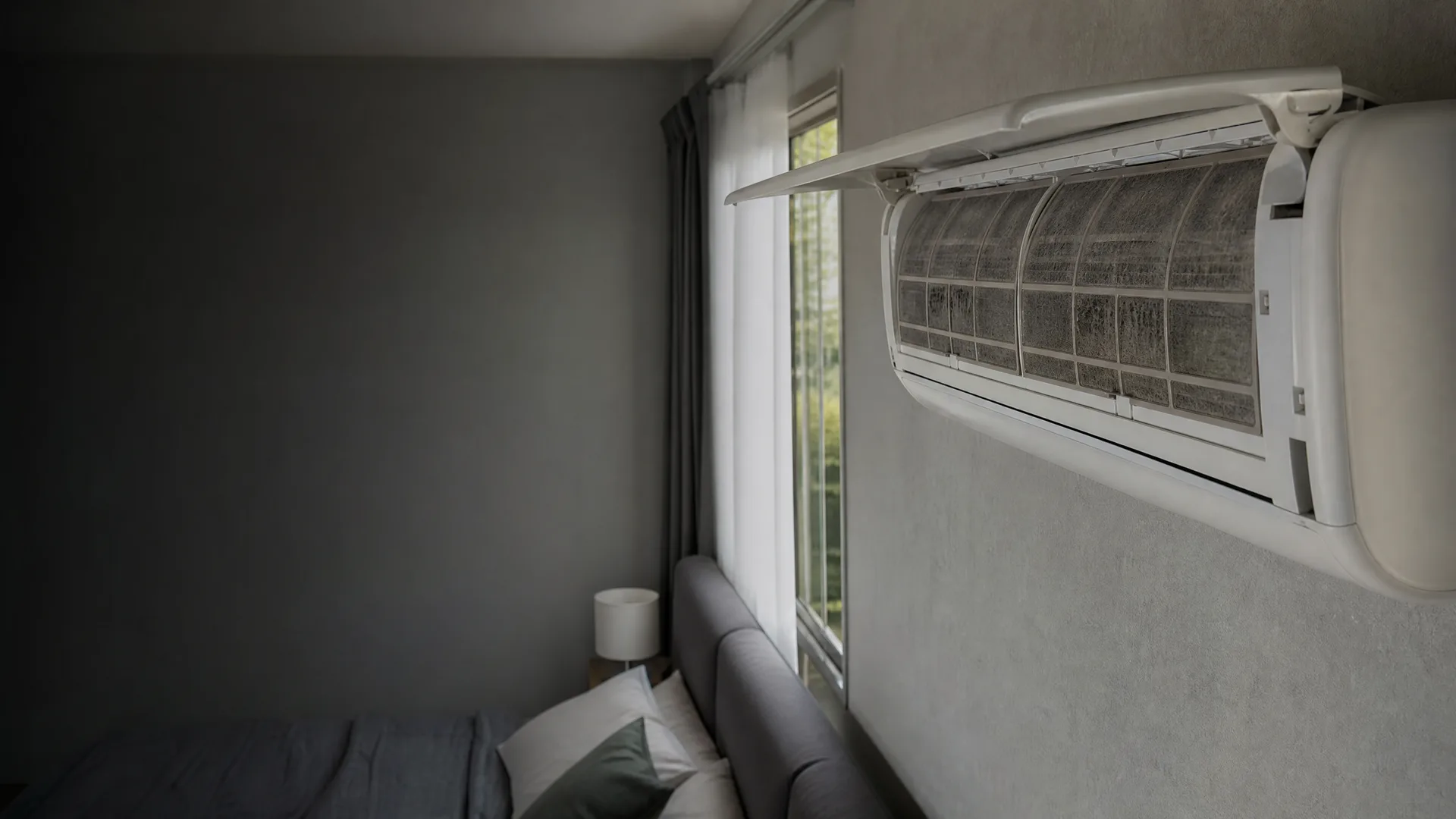
Interior room corner with a wall-mounted mini-split air conditioner, its front panel open to expose dusty coils, beside a curtained window and a gray sofa with pillows.

Spring comes early where you are, and the first warm week feels like a reward. You pop the cover off the indoor unit in the bedroom, more out of curiosity than anything, and find the filter screen gone grey with dust. All those months of heat passing through it, morning and night, since the first cold snap back in fall. You run a finger across it and the dust just sits there, packed in. The unit's been working the whole time you weren't looking, warming the room every time the temperature dropped, and this is what that looks like up close. You set the cover down on the bed and figure you'll rinse the screen off before you put it back.


Is your mini split keeping up on the cold mornings

You notice it first at the thermostat on a cold morning: the unit running longer than it used to, or the air coming out the vent not feeling as warm as it did last winter. Maybe there's a faint musty smell when it first kicks on, or a thin layer of frost on the outdoor unit that doesn't clear by mid-morning. The indoor unit might cycle on and off more than it settles into a steady run. None of that means it's failing. It usually means the filter is clogged or the coils need a cleaning. Left alone, the system works harder to put out the same heat, your power bill climbs, and the parts inside wear down faster than they should.

A white wall-mounted mini-split indoor unit installed high on a gray interior wall, with a sofa, dark table and window visible in an adjoining room to the right.

Running clean

A mini split that's kept up stays quiet and even through winter. The air coming off the indoor unit feels warm from the first minute, the room holds its temperature, and the coil behind that white casing stays free of the dust that chokes airflow. This is what a season of steady heating should look like.

A wall-mounted mini-split air conditioner indoor unit with a dusty beige casing and dark louvered vent, installed near the ceiling on a plain beige wall.

Running dirty

Dust builds up on the casing and louvers first, but it's piling up on the coil too, where you can't see it. A mini split working this hard to push heat through a clogged coil draws more power for less warmth, and the yellowing on the plastic is a sign of how long it's gone without a cleaning.

A gray-haired man in a blue quarter-zip sweater sits in an armchair with his eyes closed, beside a large window with bare trees outside and a potted plant and lamp nearby.
A woman in a cream knit sweater sits in an armchair with her eyes closed and head tilted back, beside a window showing orange autumn foliage and a wooden side table with a mug.
A white wall-mounted mini-split air conditioner unit high on a light gray interior wall, with a beige curtain and window at the left and wood-look flooring below.

Carrying the winter fine

The coil behind that panel stays clean, so heat moves off it the way it's supposed to. Air comes out warm and steady, the unit cycles normally, and it isn't working harder than it has to just to hold a room at temperature.

A dusty white wall-mounted mini-split air conditioner indoor unit with open louvers, installed near the ceiling on a plain light-colored wall.

Running dirty

Dust and grime built up along the vents cut off airflow at the one place it has to move freely. The unit pulls more power to push out less heat, and that grime is usually holding moisture that doesn't belong in there.

A dusty, discolored wall-mounted mini-split air conditioner unit near the ceiling of a plain beige interior wall.
Before you get your mini split maintenance
A white wall-mounted mini-split air conditioner installed near the ceiling on a plain beige interior wall.
After you get your mini split maintenance
  1. Cold outside air passes over the outdoor unit's coil

  2. Refrigerant inside that coil absorbs heat from the air

  3. A compressor squeezes the refrigerant to raise its temperature

  4. Hot refrigerant travels inside to the indoor unit's coil

Power costs 15.12 cents per kilowatt-hour statewide

At 15.12 cents per kilowatt-hour, running your mini split all winter costs about what it should if the coils are clean and the filter's been washed. A dirty filter or a low charge makes the unit pull more watts for the same heat, and that shows up on the bill before you ever see it fail.

EIA-861 2025 statewide residential average

Running your mini split all winter is fine. What matters is whether it's clean and charged enough to do it without strain, and that's worth having checked once before the cold settles in for good. A tech who works on these units all over South Carolina every winter knows which brands lose refrigerant slow, which filters clog fast in this humidity, and what a coil looks like right before it starts costing you money. When you put in a request here, it goes to one licensed contractor local to you, not a handful of companies competing for the job, so you're not fielding five calls trying to sort out who's actually available. You'll know where things stand with your unit, and you won't be the one chasing down who can look at it.

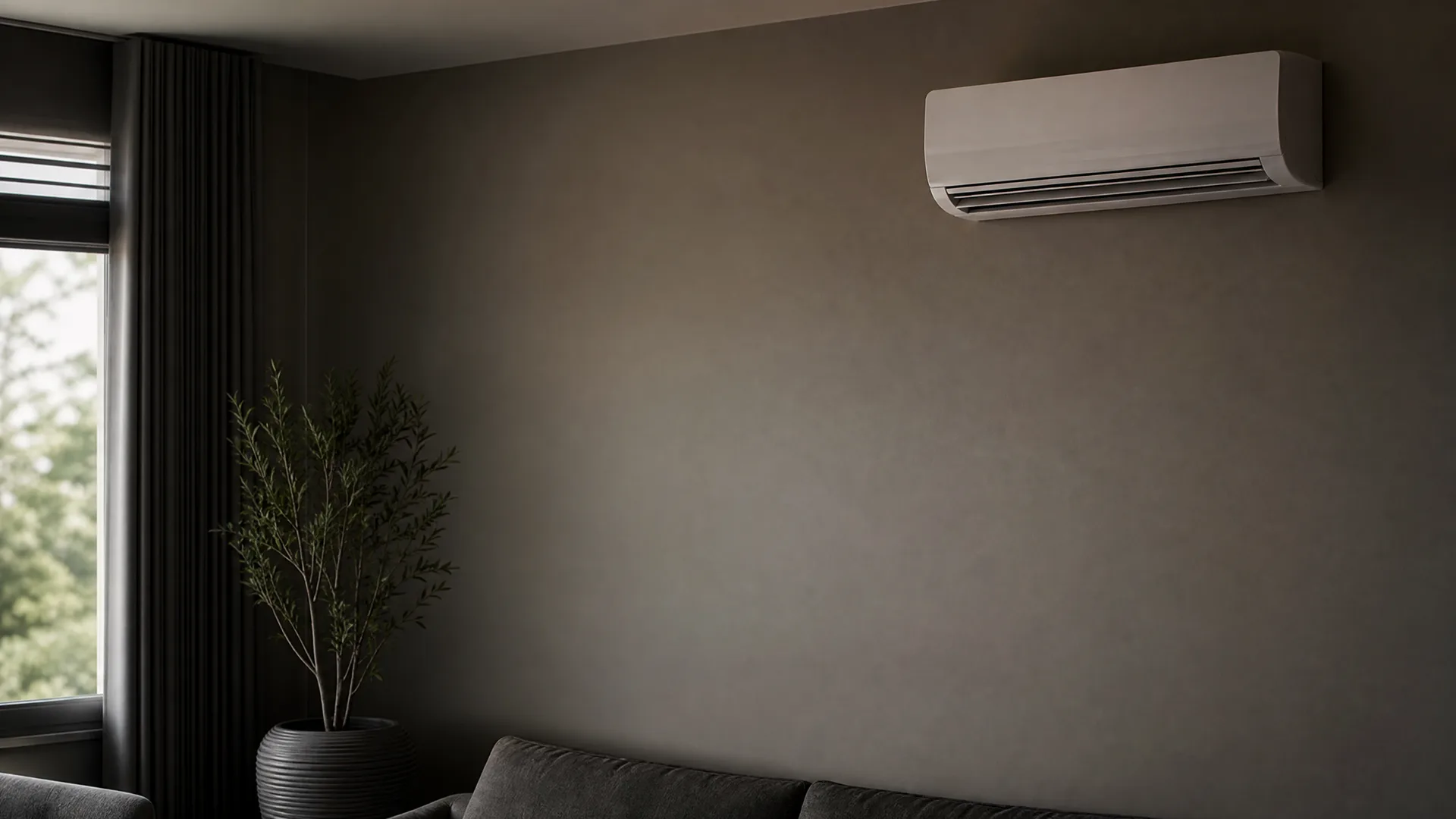
A white wall-mounted mini-split air conditioner high on a dim gray interior wall, with a potted thin-leaved plant, dark curtains and a window at left and a dark sofa at bottom.

Let someone else find the pro

Your request goes to one pro, not a list of companies.

Step 1 of 3: Equipment